Spanish filmmaker, documentary director, assistant director, European cinema, Sade Adu former husband, film industry career, private celebrity figure, behind-the-scenes filmmaker, 1989 marriage, Spanish film production
Who Is Carlos Scola Pliego?
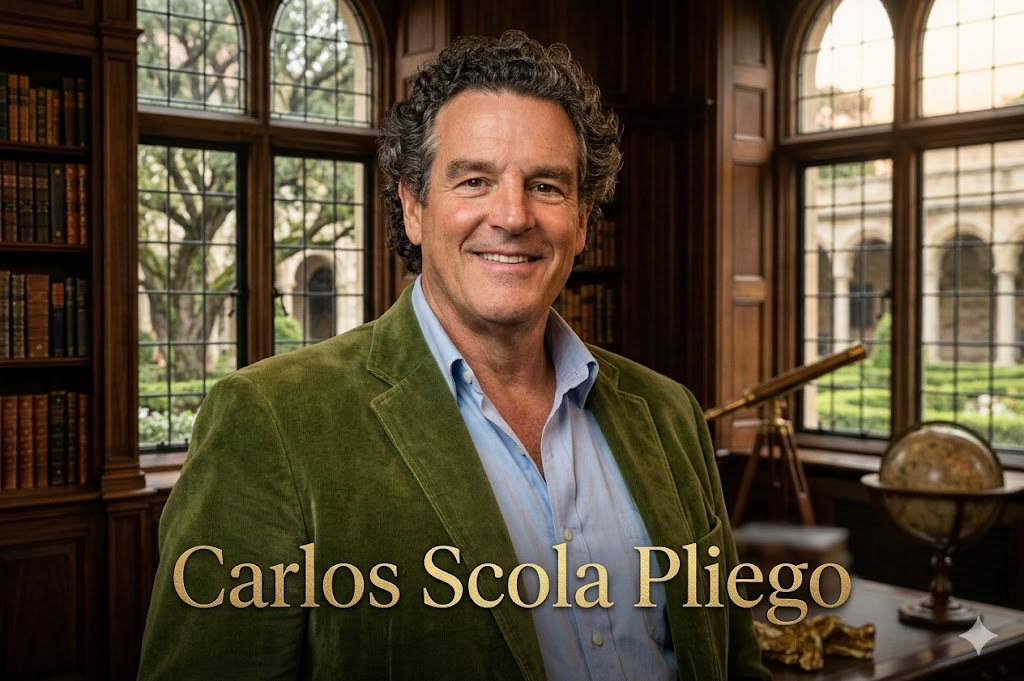
Carlos Scola Pliego is a Spanish filmmaker and assistant director who worked quietly in the film industry and became widely known as the former husband of singer Sade Adu. Unlike many people connected to fame, he chose a life away from public attention and built his career behind the scenes.
In an age where proximity to a global celebrity almost always translates into a relentless media presence, Carlos Scola Pliego stands as a strikingly rare exception. He has never leveraged his connection to one of the most iconic voices in popular music to build a personal brand, attract tabloid coverage, or court public sympathy. Instead, throughout the decades since his name first entered mainstream conversations, he has chosen the path of quiet professionalism — the kind that defines serious artists rather than celebrity satellites.
What makes CarlosScola Pliego especially interesting is the contrast between public curiosity and personal privacy. Unlike many people linked to global stars, he did not build a media persona around his relationship. Instead, he remained largely out of the spotlight, leading many fans and readers to seek reliable information about his life, work, and identity.
This comprehensive biography brings together everything that is verifiably known about Carlos Scola Pliego — his origins in Spain, his methodical climb through the ranks of European cinema, his marriage to Sade Adu, the emotional aftermath of their separation, his literary contributions, and his enduring legacy as a filmmaker who chose meaning over fame. CarlosScola Pliego is, at his core, a man defined more by what he built quietly than by what the world projected loudly onto him.
Early Life and Origins
Carlos Scola Pliego was born in Spain, a country with a rich cinematic and artistic heritage. Details about his early childhood, exact birth date, and family background remain largely undisclosed. He grew up in a culturally influenced environment that valued creative expression.
Spain’s contribution to world cinema is profound and storied. From the surrealist experimentalism of Luis Buñuel to the emotionally charged contemporary works of Pedro Almodóvar, the country has consistently produced filmmakers who operate with both technical precision and artistic ambition. Growing up within this cultural ecosystem almost certainly shaped the sensibilities that Carlos Scola Pliego would later bring to his own work in documentary filmmaking and production.
Reliable records about Carlos Scola Pliego’s early life are scarce. What is known, however, is that he was born in Spain and holds Spanish nationality. His upbringing remains largely undocumented, and public archives do not reveal details about his education or childhood environment.
What we can infer from the trajectory of his career is that CarlosScola Pliego developed both a technical understanding of film craft and a philosophical approach to storytelling from a relatively young age. His eventual work in documentary filmmaking — which demands intellectual curiosity, patience, and a genuine investment in human stories — suggests a person shaped by serious engagement with culture, society, and narrative long before he stepped onto a professional film set.
There is no confirmed public information about Carlos Scola Pliego’s parents. Their names, background, and careers have never been revealed. This suggests that his family lived a normal life away from media attention. Even when Carlos became connected to a global celebrity, he kept his parents completely out of the spotlight.
This instinct to shield family from public scrutiny reflects a value system that runs consistently through every chapter of his life. For Carlos Scola Pliego, privacy is not a defensive response to unwanted attention but an active, principled choice that speaks to his character.
There is very little public information about CarlosScola Pliego’s education, showing his strong commitment to peace and privacy. Despite decades in the creative world, he has never publicly disclosed where he studied or what degrees he may hold.
Carlos Scola Pliego’s Career in the Spanish Film Industry
The Early Years: Script Supervisor and Assistant Director
During the course of his working life, Pliego has been involved with various facets of the Spanish film industry. He got his start as the script supervisor on “La boda del señor cura” in 1979 and “Opera Prima” released in 1980.
Script supervision is among the most demanding and underappreciated roles in any film production. A script supervisor — sometimes called a continuity supervisor — is responsible for ensuring that every scene matches the screenplay precisely, that visual continuity is maintained across multiple takes and shooting days, and that the director’s intentions are faithfully represented in what actually gets captured on camera. Beginning his professional journey in this capacity, Carlos Scola Pliego demonstrated immediately that his talents lay in the disciplined, detail-oriented work that holds productions together from the inside. kronosshort
This foundation proved invaluable as he progressed. Between 1981 and 1985, the young filmmaker was the assistant director of nine film and TV projects. He worked on “Eleni,” an early John Malkovich vehicle, and the 1985 miniseries “Christopher Columbus” starring Gabriel Byrne and Virna Lisi.
The assistant director role is where a filmmaker truly learns how cinema works as both art and industry. The assistant director manages the shooting schedule, coordinates between departments, handles extras and background action, and serves as the crucial link between the director’s creative vision and the logistical machinery of a film set. Working across nine productions in just four years gave CarlosScola Pliego an unusually broad and practical education in the realities of professional filmmaking. Uae peak, thehometrotters, meetshaxs, beaconsoft, uhoebeans, aliensync, programgeeks, avstarnews.
Working on International Blockbusters
Among the most fascinating aspects of the career of Carlos Scola Pliego is his involvement — even if in a supporting, uncredited capacity — in major international productions filmed in Spain during the early 1980s.
He was also the second assistant director for two big Hollywood productions filmed partly in Spain: Never Say Never Again, a James Bond film with Sean Connery, and Curse of the Pink Panther. His role was uncredited, but he still played a part in helping these films run smoothly.
Never Say Never Again, released in 1983, marked Sean Connery’s return to the James Bond franchise after a twelve-year absence. It was a major cultural event and a significant commercial production. The fact that Carlos Scola Pliego contributed to it — however briefly and however uncredited — places him on the periphery of cinematic history in an interesting way. His name may not appear in the opening titles, but his organizational work would have contributed to the smooth running of production days on Spanish soil.
Similarly, Curse of the Pink Panther and Hundra, both 1983 productions, added further depth to his growing résumé as someone capable of functioning within both European arthouse circles and the more commercially driven machinery of Hollywood-adjacent filmmaking.
Moving Behind the Lens: Directing and Documentary Work
The transition from assistant director to director is one that many film professionals attempt but not all successfully navigate. In 1988, Pliego wrote, directed, and produced “Ngira: Gorilas en la montaña,” a documentary short filmed in the Democratic Republic Of Congo. He followed this with a full-length documentary, “Donde termina el corazón,” touching on various aspects of the African continent.
These two projects reveal a great deal about the artistic personality of Carlos Scola Pliego. Rather than turning the camera toward the familiar landscapes of Spain or the commercially safe narratives of European drama, he chose to travel to Africa — a choice that required not only logistical ambition but genuine intellectual and humanitarian engagement. Documentary filmmaking about wildlife and African cultural life in the late 1980s was a niche pursuit, demanding real passion for the subject matter.
Ngira: Gorilas en la montaña, as a documentary about gorillas in what was then Zaire, situates him within a tradition of nature and wildlife filmmaking that valued environmental awareness and cultural sensitivity. The film demonstrated that his interests as a director extended well beyond the commercial mainstream into the realm of socially conscious storytelling.
According to film databases, Carlos has credits linked to documentary and film projects. Some of the titles associated with his name include Ngira: Gorilas en la montaña (1988), a documentary project where he was credited as director and writer, and Donde termina el corazón (1989), where he was listed as director.
Later Career and Final Film Credit
His last film credit on IMDb is as an additional crew member on the 2007 sports drama “Goal II: Living the Dream.”
This final credit, appearing almost two decades after his directorial work in Africa, suggests that Carlos Scola Pliego maintained at least a peripheral involvement in film production well into the 2000s. Goal II: Living the Dream, a football drama set in the world of professional European soccer, is a very different genre from his earlier documentary work, but his presence on the production speaks to the versatility and the enduring professional connections that defined his career trajectory.
Literary Contributions
Beyond his work in cinema, Carlos Scola Pliego made contributions to literature that have received less mainstream attention but reveal the depth and range of his intellectual interests.
In addition to his film work, Carlos Scola Pliego is also credited as an author. His literary contributions include El Médico de Toledo (The Spanish Doctor) and Salvador: un apunte de filosofía sencilla, books that reflect his philosophical and introspective approach to storytelling. Although not widely known to mainstream audiences, his efforts across film and literature reveal a multifaceted individual — one whose creative identity extends far beyond his association with celebrity figures.
El Médico de Toledo suggests engagement with historical narrative and regional Spanish identity, while Salvador: un apunte de filosofía sencilla — translating roughly as “Salvador: A Note on Simple Philosophy” — points toward a reflective, meditative inner life. These are not the publications of someone seeking public recognition. They are the works of a person processing the world through writing, finding meaning through narrative, and sharing that meaning carefully, without fanfare.
Meeting Sade Adu: The Romance That Defined a Generation’s Curiosity
How They First Met
Carlos Scola Pliego met Sade Adu while she was filming music videos in Spain for her album Promise. He was working behind the scenes as part of the film team. Their first meeting happened during long days on set, where both were focused on creating beautiful work.
Sade’s album Promise, released in 1985, was a landmark in contemporary music. Its blend of jazz-inflected soul, restrained orchestration, and emotionally precise songwriting earned it critical acclaim and commercial success on a global scale. The music videos being filmed in Spain to support this album brought two creative professionals — one behind a microphone, the other behind a camera — into the same physical and artistic space.
Sade met Pliego while shooting three music videos with director Brian Ward in Spain off the album “Promise,” released in 1985. Following a grueling tour promoting her second studio album, the untimely death of her father, Bisi Adu, and the unrelenting media attention, the singer relocated to Spain. She reconnected with the assistant director and was to have fallen “madly in love” with him. damon darling net worth
It is worth pausing on the emotional context in which this romance developed. Sade Adu arrived in Spain carrying the weight of international stardom, grief for a lost parent, and exhaustion from two years of global touring. Spain offered refuge. And within that refuge, Carlos Scola Pliego offered something that few people in her life could provide at that moment: authentic connection without agenda, companionship rooted in creative mutual respect, and love that operated entirely outside the machinery of the music industry.
As they spent more time together, they began to understand each other better. They shared a love for art, music, and quiet spaces. He was by her side during the making of her album Stronger Than Pride. He supported her, and she trusted him. Their connection felt natural, gentle, and very real.
The Marriage
The couple married on February 11, 1989, in Spain. Their relationship took place during a highly successful period in Sade’s music career.
Some sources cite the marriage as having taken place in October 1989, while others record February 11, 1989. The discrepancy in reported dates likely reflects the challenge of verifying details about events that both parties deliberately kept private. What is consistent across all credible sources is that the wedding was an intimate affair, held in Spain, in keeping with the values both Carlos Scola Pliego and Sade Adu shared about personal life and privacy.
Their wedding took place in a Spanish castle. It was private, calm, and beautiful, just like them.
At the time of the wedding, Sade was one of the most recognized voices in contemporary music. Her albums — Diamond Life, Promise, and Stronger Than Pride — had collectively sold tens of millions of copies worldwide and established her as an artist of rare emotional intelligence and sonic sophistication. For Carlos Scola Pliego, marrying this woman was not about gaining access to fame. The couple’s shared preference for a quiet, creatively focused life made it clear that their union was built on something more substantive than celebrity attraction.
The Separation and Divorce
What Happened Between Them
According to news reports, Sade and Pliego had a rocky relationship. The singer split from her husband a year after their wedding and moved back to London.
The details of what ended the marriage of Carlos Scola Pliego and Sade Adu have never been fully disclosed. Neither party has given a comprehensive account, which is entirely consistent with the privacy both have always maintained. What Sade did share publicly — in characteristically measured, poetic terms — was the emotional weight of the separation.
She said in a rare interview that she did not get over their love fleetly: “It was a very sad situation. I had to leave… very quickly… with a very small bag. It took five years for it not to be something that affected the way I felt.”
These words are among the most revealing that Sade has ever offered about her personal life. They describe not a gradual fading of love but a sudden, painful rupture — a departure so urgent it required taking almost nothing. And then five years of emotional recovery. Five years before the memory stopped aching.
The couple’s divorce was finalized in 1995.
How the Relationship Shaped Sade’s Music
Not one to share her feelings with the media, Sade’s fans get the best insight into her life through her music. Towards the end of 1992, the singer was ready to open up on the album “Love Deluxe.”
Love Deluxe, released in 1992, is widely considered one of the most emotionally complex and musically accomplished albums in Sade’s catalog. Songs on the album explore themes of enduring love, heartbreak, longing, and the slow process of emotional recovery. Many music critics and fans have interpreted the album’s emotional landscape as a direct reflection of her experience with Carlos Scola Pliego — the intensity of their connection, the devastation of its collapse, and the long journey toward healing.
Tracks like No Ordinary Love, which became one of Sade’s signature songs and earned a Grammy Award for Best R&B Performance by a Duo or Group, are saturated with the kind of longing that comes only from genuine personal loss. The music that emerged from the aftermath of this marriage has resonated with millions of listeners across decades, which means that — indirectly, invisibly — the emotional legacy of Carlos Scola Pliego has touched far more lives than his filmmaking career alone ever could.
Many believe her experiences, including heartbreak, shaped her songs. Public fascination with Carlos Scola Pliego is tied to the emotional mystery in Sade’s music.
Children and Family Life
One of the most frequently searched questions about Carlos Scola Pliego concerns whether he and Sade Adu had children together.
Carlos Scola Pliego and Sade Adu did not have any children together during their marriage. Sade has a child from a different relationship, but her marriage to Carlos remains without offspring.
Sade Adu’s daughter, Ila Adu, was born from a later relationship and is not the child of CarlosScola Pliego. Ila has publicly identified as transgender and has been supported by Sade throughout her transition, a fact Sade discussed in a rare interview that drew considerable public attention.
There are no confirmed public records showing that they had children together. After their divorce, Carlos Scola Pliego returned to a very private life.
Whether Carlos Scola Pliego has had children in the years since his divorce remains unknown. He has maintained such thorough privacy that no reliable information about his post-divorce personal life has entered the public record.
Personal Character and Values
A Man Who Chose Privacy
Carlos Scola Pliego is known for living a quiet and private life. He avoids social media, interviews, and public appearances. Even during his marriage, he stayed away from fame. From available information, Carlos appears to be calm, creative, and thoughtful. He values privacy and prefers meaningful work over attention. He represents a personality that is rare in the entertainment world.
In contemporary culture, where social media has turned even minor celebrities into prolific self-promoters, the complete absence of Carlos Scola Pliego from any public platform is both unusual and telling. He has no verified social media presence. He has given no interviews about his marriage or his film career. He has not written a memoir, appeared on a podcast, or sat down with a journalist at any point in the thirty-plus years since his divorce became public knowledge.
This is not the silence of someone with nothing to say. It is the chosen quiet of someone who has decided that his inner life belongs to him alone. In an entertainment industry that feeds on personal disclosure, that choice requires active, ongoing effort.
His decision to live away from the glare of public scrutiny respects his initial allure, making him a perennial subject of fascination. Whether discussing his contributions to cinema or his famous relationship, Carlos Scola Pliego remains an intriguing character in the tapestry of celebrity culture.
Creative Philosophy and Intellectual Depth
The breadth of Carlos Scola Pliego’s creative output — script supervision, assistant directing, documentary filmmaking, writing, philosophical authorship — points to a person whose intellectual life is rich, varied, and seriously engaged with meaning. He has not pursued any single creative lane but instead followed curiosity wherever it has led him, from the gorilla habitats of central Africa to the philosophical meditations of his literary work.
This kind of creative eclecticism is characteristic of artists who prioritize personal expression over commercial calculation. It suggests someone who would find the spotlight uncomfortable not because of shyness or social anxiety but because sustained public attention would feel fundamentally incompatible with the inner focus that serious creative work requires.
Net Worth and Financial Standing
Carlos Scola Pliego is believed to have built financial stability through his work in the film industry. While exact numbers are not officially confirmed, his long career in cinema likely provided steady income and professional success.
Estimating the net worth of Carlos Scola Pliego with any precision is not possible given the absence of public financial disclosures. His career spanned multiple decades and included work on both major international productions and smaller independent projects. Documentary filmmaking rarely generates the kinds of returns associated with mainstream commercial cinema, but his roles in larger productions — including the James Bond film Never Say Never Again — would have been compensated according to industry-standard rates.
Within the film industry, assistant directors and documentary filmmakers often work without mainstream fame.
His literary output suggests a person for whom financial accumulation was never the primary motivation. Authors of philosophical texts and regional historical fiction rarely write for profit. The picture that emerges is of someone who has achieved enough financial stability to live according to his values, without either conspicuous wealth or apparent hardship.
In contrast, his former wife Sade Adu has an estimated net worth reported by multiple sources at around $40 million, a reflection of a music career spanning more than four decades with consistent critical acclaim and commercial success. The financial gulf between them does not appear to have been a source of public friction; Carlos Scola Pliego has never made any public statements about financial matters related to their marriage or divorce settlement.
Where Is Carlos Scola Pliego Now?
Following his divorce from Sade Adu, Carlos continued his life in Spain. Details about his post-divorce life are limited, but it is presumed that he continued working in his field of passion, film directing. His life after Sade shows a return to privacy, focusing on his career and personal growth away from the public eye.
The trail of verifiable information about Carlos Scola Pliego effectively ends with his final film credit in 2007. In the nearly two decades since, he has not appeared in any publicly documented professional capacity. Whether this means he has retired from filmmaking, shifted entirely to writing and private creative work, or is engaged in projects that simply haven’t attracted public attention is impossible to determine from available sources.
After his divorce from Sade, Carlos stepped even further away from public life. He continued his work in film for some time but slowly disappeared from public records. There are very few details about his later life. This has made him a mysterious figure.
Some sources suggest he may reside in Madrid, though this has not been confirmed through any official channel. What is clear is that his absence from public life is complete and apparently deliberate.
Carlos Scola Pliego’s Lasting Cultural Significance
Why People Are Still Searching for Him
Interest in Carlos Scola Pliego goes beyond celebrity fascination; it shows how elusive figures attract audiences in a visible age. His life blends cinema, romance, privacy, and artistic credibility, appealing to those interested in film and music culture.
The continued public interest in Carlos Scola Pliego is not difficult to understand. He is the only man that one of the most beloved and enigmatic artists in popular music history ever chose to marry. The relationship was brief but emotionally catastrophic in ways that Sade communicated — indirectly but powerfully — through some of the most resonant music of the early 1990s. He is, in a very real sense, part of the emotional DNA of albums that millions of people carry as personal soundtracks to their own love stories and heartbreaks.
But there is more to the fascination than his proximity to Sade. In an era when celebrity culture often overshadows craft, Carlos Scola Pliego stands out for his privacy, which has heightened public interest in him.
He is interesting precisely because he refuses to be found. In a world where everyone with a tangential connection to fame eventually produces a podcast episode, a documentary cameo, or a social media reveal, his sustained, decades-long silence is genuinely remarkable. It functions almost like a riddle — and human beings are drawn inexorably to riddles.
His Place Within European Cinema History
Carlos Scola Pliego is a Spanish filmmaker, documentary director, assistant director, and script supervisor with a long-standing career in European and international cinema. He is best known for his behind-the-scenes contributions to documentary filmmaking and major Hollywood productions. Over the years, Carlos Scola Pliego has built a reputation as a respected creative professional whose work spans documentaries, feature films, and international projects.
His contribution to European cinema is modest by the standards of household-name directors, but it is genuine and varied. As a script supervisor and assistant director, he contributed organizational and creative backbone to productions ranging from small Spanish dramas to major international films. As a documentary director, he pursued stories that mattered to him — stories about wildlife, African culture, and the human condition — without regard for commercial reward. As a writer, he engaged with philosophy and history in ways that placed him within a broader tradition of Spanish intellectual and cultural life.
His film credits are a key reason his name continues to appear in entertainment searches. This underscores that Carlos Scola Pliego is more than a name linked to Sade Adu; his filmmaking remains central to his identity.
Verified Facts vs. Online Misinformation
It is important to address the significant amount of misinformation that circulates online about Carlos Scola Pliego. This limited information can sometimes lead to online speculation. However, for long-term content reliability, it is essential to avoid unverified rumors and focus only on confirmed facts.
Several points of common confusion deserve clarification:
Some sources have incorrectly stated that Carlos Scola Pliego was born in the United States. Reliable sources show that he worked mainly in the Spanish film world, and all signs point to him being Spanish. All credible evidence confirms that he is Spanish by birth and nationality.
Some sources have claimed he and Sade Adu had a daughter together. During their marriage, they did not have children together, a fact confirmed by multiple biographical accounts. This means that carlos scola pliego daughter — a phrase often searched online — is a misconception. There is no verified evidence that he has any children.
Some sources have speculated about his exact birth year, placing it variously in the 1950s or the 1960s. Inquiries about Carlos Scola Pliego’s age reveal one consistent fact — his date of birth is not officially recorded in any verified database. What we do know is that by the late 1970s, he had already begun working in the film industry, which implies that he was likely an adult by that time.
The Broader Legacy: Privacy as a Form of Dignity
Carlos Scola Pliego’s story ultimately raises a question that extends beyond his specific biography: what does it mean to live with integrity in the shadow of someone else’s fame?
Many people in his position would have found the temptation to step forward irresistible. Book deals, interview requests, documentary appearances, celebrity adjacent status — all of these are available to anyone who was once married to a globally beloved music icon. CarlosScola Pliego has declined every one of these opportunities, implicitly and completely, for more than thirty years.
Carlos Scola Pliego’s legacy is built on quiet creativity and personal choice. He represents a different kind of success. One that values peace, privacy, and meaningful work over public attention. His connection to Sade ensures that his name remains part of cultural history.
There is something deeply instructive about this. Not everyone who achieves significance needs to announce it. Not every love story worth telling needs to be told by the people who lived it. Not every talented professional needs to build a public profile in order for their work to have mattered.
Carlos Scola Pliego made films. He wrote books. He directed documentaries about gorillas in the Congo. He fell in love with a woman whose music has comforted millions of people. He got married in a Spanish castle. He lived a rich, complex, private life. And then he disappeared back into that privacy with what appears to be complete contentment.
That, in its own way, is a remarkable achievement.
Quick Reference: Key Facts About Carlos Scola Pliego
| Category | Detail |
|---|---|
| Full Name | Carlos Scola Pliego |
| Nationality | Spanish |
| Profession | Filmmaker, Assistant Director, Writer |
| Career Start | 1979 (La boda del señor cura) |
| Notable Films | Never Say Never Again (1983), Eleni, Christopher Columbus (1985) |
| Directed Works | Ngira: Gorilas en la montaña (1988), Donde termina el corazón (1989) |
| Final Film Credit | Goal II: Living the Dream (2007) |
| Literary Works | El Médico de Toledo, Salvador: un apunte de filosofía sencilla |
| Marriage | Sade Adu (1989–1995) |
| Children | None confirmed |
| Current Status | Private life, location unconfirmed |
| Social Media | None verified |
Frequently Asked Questions
Who is Carlos Scola Pliego?
Carlos Scola Pliego is a Spanish filmmaker, documentary director, assistant director, and script supervisor with a long-standing career in European and international cinema. He is best known for his behind-the-scenes contributions to documentary filmmaking and major Hollywood productions, as well as for being the former husband of British-Nigerian singer-songwriter Sade Adu.
When did Carlos Scola Pliego marry Sade Adu?
The couple married on February 11, 1989, in Spain. Their marriage lasted several years before ending in divorce in 1995.
Did CarlosScola Pliego and Sade Adu have children?
Carlos Scola Pliego and Sade Adu did not have any children together during their marriage. Sade has a child from a different relationship, but her marriage to Carlos remains without offspring.
What films did Carlos Scola Pliego work on?
He worked on “Eleni,” an early John Malkovich vehicle, and the 1985 miniseries “Christopher Columbus” starring Gabriel Byrne and Virna Lisi. He was the second assistant director for Never Say Never Again, a James Bond film with Sean Connery, and Curse of the Pink Panther.
What documentaries did Carlos Scola Pliego direct?
In 1988, Pliego wrote, directed, and produced “Ngira: Gorilas en la montaña,” a documentary short filmed in the Democratic Republic Of Congo. He followed this with a full-length documentary, “Donde termina el corazón,” touching on various aspects of the African continent.
Is Carlos Scola Pliego active on social media?
Carlos Scola Pliego is known for living a quiet and private life. He avoids social media, interviews, and public appearances. There are no verified accounts associated with him on any public platform.
Where does Carlos Scola Pliego live now?
Carlos Scola Pliego’s current residence has not been officially confirmed. Most credible sources suggest he remains in Spain, living privately and away from any media presence.
Why did CarlosScola Pliego and Sade Adu divorce?
The specific reasons behind the divorce between Carlos Scola Pliego and Sade Adu have not been publicly disclosed. Sade acknowledged in a rare interview that the separation was sudden and emotionally devastating, and that it took her five years to emotionally recover.
Did Carlos Scola Pliego write any books?
His literary contributions include El Médico de Toledo (The Spanish Doctor) and Salvador: un apunte de filosofía sencilla, books that reflect his philosophical and introspective approach to storytelling.
What is Carlos Scola Pliego’s net worth?
Carlos Scola Pliego is believed to have built financial stability through his work in the film industry. While exact numbers are not officially confirmed, his long career in cinema likely provided steady income and professional success. No official figure has ever been published.
Conclusion
The full story of Carlos Scola Pliego is one that exists largely in spaces between public records — in the films he helped make without taking credit, in the documentaries he directed without seeking an audience, in the books he wrote without courting readers, and in the marriage he entered with genuine love and exited with apparent grace. He is a figure who defies the usual logic of celebrity adjacency, choosing consistently and deliberately to exist on his own terms rather than those imposed by the fame of someone else.
His professional contributions to Spanish and European cinema are modest in scale but genuine in quality. His personal life — above all, his marriage to one of popular music’s most celebrated voices — has ensured that his name persists in cultural memory long after his active career concluded. And his sustained, unwavering commitment to privacy has made him one of the most intriguing minor figures in contemporary entertainment history.
Carlos Scola Pliego is proof that a life does not need to be loud to be significant. Some stories are more powerful precisely because they are told so quietly.